
DopaMax
TM

Dopamine is a neurotransmitter that promotes feelings of pleasure and reward, supports memory, attention, and more.1
As we age, increased activity of an enzyme called monoamine oxidase B (MAO-B) degrades dopamine, causing levels to fall.2
Lower dopamine levels can contribute to reduced motivation and decreased enthusiasm for things that would excite most people.
A solution is to ingest compounds that inhibit the MAO-B enzyme.
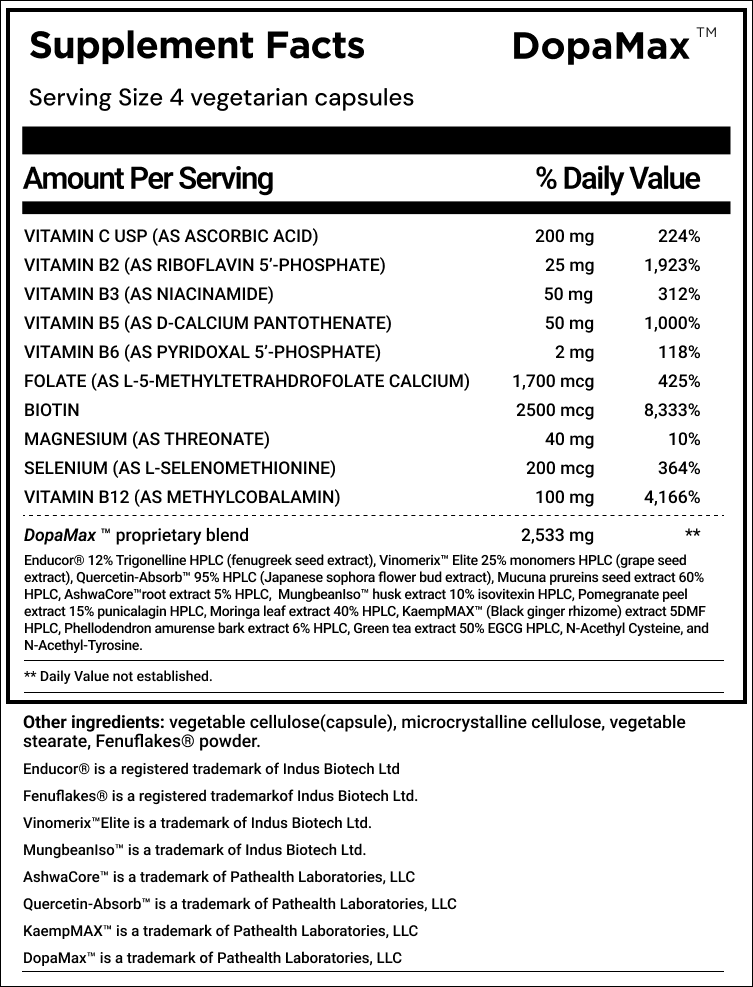
Scientists have found that components of phellodendron tree bark accomplish this in lab studies3,4 and have neuroprotective effects in animals.5-7
Preclinical research also shows that a specific form of vitamin B12 may protect neurons and help prevent a decline in dopamine levels.8
These compounds may help maintain motivation and feelings of pleasure, while reducing risk for neurodegenerative illnesses.
What is Dopamine?
Dopamine is often referred to as the “feel-good hormone” due to its role in regulating mood.1
The brain releases dopamine during pleasurable activities. Low dopamine levels are associated with depression and a lack of motivation and pleasure.9
But the brain uses dopamine for more than mood elevation.
This neurotransmitter also influences movement, learning, cognition, and memory.10
Dopamine enables youthful cognitive performance and body coordination.11,12
Dopamine depletion plays a role in certain neuro-degenerative diseases, while increasing dopamine has been shown to prolong lifespan in animals.1,13,14
In a region of the brain that plays a role in cognitive and motor function, levels of dopamine decline by about 13% each decade after age 45.15
This decline coincides with an increase in the brain levels of monoamine oxidase B (MAO-B), an enzyme that degrades neurotransmitters such as dopamine.2
Low dopamine levels are associated with depression, lack of motivation, and pleasure.9 These mood and motivational changes also may be seen with normal aging in some people.
Rising MAO-B levels pose even more of a threat.
MAO-B activity is higher in dementia patients than in non-impaired individuals the same age,16 suggesting a role in neurodegeneration.
One reason may be that increased MAO-B activity results in formation of potentially damaging by-products2,17,18 that can contribute to neurodegenerative diseases such as Parkinson’ and Alzheimer’s Disease.
Doctors frequently prescribe MAO-B inhibitors such as deprenyl (also called selegiline) to stop MAO-B degradation of dopamine in patients with Parkinson’s disease.19
Inhibiting MAO-B activity helps decrease the breakdown of dopamine and the potential harm that can be done by too much enzyme activity. This helps protect our aging brains.