


Pickle ball
My First Paddle Every player remembers the paddle that started it all. For me, it was a basic composite paddle—nothing special, but it changed everything. I still remember stepping onto the court for the first time, unsure and curious. That paddle helped me discover a sport that builds community, tests skill, and creates joy.

nicdark

0 Comments
Pickle ball
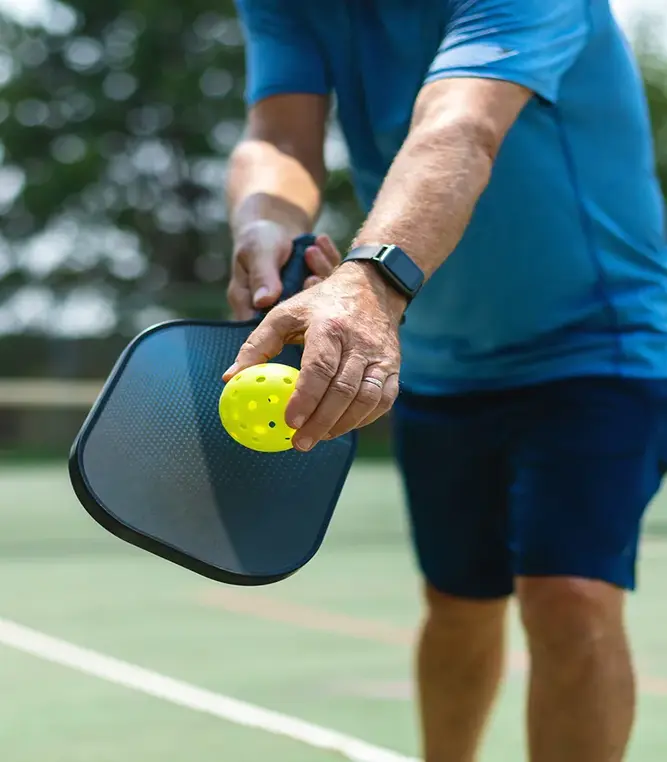
Coaching & Lessons Overview Whether you're new to pickleball or working toward competitive goals, my coaching sessions are tailored to your skill level and learning style. Each session blends instruction, practice, and play to help you grow with confidence.
nicdark
0 Comments
Lorem ipsum dolor
Lorem ipsum dolor

Lorem ipsum dolor
Lorem ipsum dolor

The Brutal Pickleball Truth: Most Players Aren’t Bad.
They’re Just Standing in the Wrong Damn Place. 👀
Most pickleball players think their problem is technique.
They want a better paddle. More spin. A prettier third shot drop.
The real problem is much simpler. You’re standing in the wrong place.
Not a little wrong. Sometimes spectacularly wrong.
I see it every day.
Players swinging harder, reaching farther, lunging like they’re trying to catch a falling chandelier, when the real issue is they never moved two feet to the right before the ball arrived.
Here’s the uncomfortable truth from someone who coaches and competes a lot:
Pickleball is less about hitting great shots and more about being in the right place to hit easy ones.
Great players don’t look calm because they’re gifted.
They look calm because they arrived early.
The three positioning habits that quietly separate 4.0 players from everyone else.
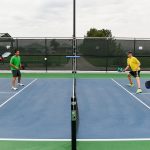
Positioning Truth #1: The “Magnet Rule” — Move With Your Partner
One of the most common things I see in doubles is this:
Your partner moves.
You don’t.
Now there’s a six foot hole between you big enough to park a Mazda.
Guess where the opponent hits the ball?
Exactly.
Pickleball doubles works like two magnets.
When one player moves left, the other player moves left.
When one player moves right, the other player moves right.
You slide together. Always.
The biggest target on the court isn’t the sideline. It’s the gap between partners.
Close the gap, and suddenly opponents have to hit riskier shots.
Leave the gap open, and congratulations, you’ve just installed a welcome mat for passing shots.
Positioning Truth #2: Stop Admiring Your Shot
Here’s another classic.
Player hits a beautiful third shot drop.
Then stands there, watching it, like it’s fireworks on the Fourth of July.
Meanwhile the opponent calmly dinks the ball back and now the player has to sprint forward like a confused gazelle.
If you hit a good shot, move forward immediately.
Drive? Move up.
Drop? Move up.
Opponent in trouble? Move up.
This isn’t optional.
The kitchen line is the command center of pickleball.
Standing at the baseline hoping good things happen is like trying to win a boxing match while sitting on a couch.
Positioning Truth #3: Expect the Next Ball Before It Happens
Good players react.
Great players anticipate.
Watch high level doubles and you’ll notice something strange.
They’re already moving before the ball crosses the net because positioning is prediction.
You hit a crosscourt dink.
Where is the most likely return coming?
Crosscourt.
So where should you already be leaning?
Crosscourt.
It’s not psychic ability. It’s pattern recognition.
The faster you start expecting the next shot, the less you’ll find yourself lunging, stretching, and performing interpretive dance moves just to reach the ball.
The Quiet Secret of Great Players
Here’s something funny.
Recreational players often watch advanced players and think:
“Wow! they make it look easy.”
That’s because it is easy when you’re standing in the right place.
The ball feels slower. Shots feel simpler.
Your paddle suddenly looks smarter than it really is.
That’s positioning doing the work.
Not magic.
You can spend months perfecting your third shot drop.
OR
You can spend a week paying attention to where you stand.
One of those will improve your game faster than the other. ... See MoreSee Less
TIP OF THE DAY!
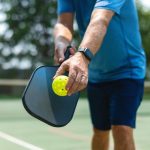
Remember, the ball always travels in the direction your paddle is facing—think of the paddle as an extension of your hand. This simple concept can correct a wide range of mistakes. Beginners and intermediate players often ask why their shots go too high, hit the net, or drift left or right. My first tip is always to focus on the paddle angle.
Want the ball to go lower? Close your hand slightly at the point of contact. Want it higher? Open it a bit. To control direction, keep your palm square to your target. Mastering this will instantly give you much better control over where your shots go. ... See MoreSee Less
Does Your Pickleball Aim Suck? 3 Secrets to Fixing It Fast
You know exactly where you want to hit it. You can picture the shot. Your brain sends the signal. And then the ball sails wide — again.
This isn’t a vision problem. It isn’t a focus problem. And it almost certainly isn’t a talent problem. The disconnect between where you think the ball is going and where it actually lands comes down to three fixable mechanics that most players never address.
Here’s what’s really going on — and how to stop it.
Secret #1: Your Swing Is Bigger Than You Think
Most errant volleys don’t start at the point of contact. They start on the backswing.
When your paddle travels too far back — beyond your peripheral vision — you lose the reference point your brain needs to calculate the shot. Your body is essentially swinging blind for part of the stroke, and by the time the paddle comes forward, the margin for error has already multiplied.
For most recreational players, keeping the paddle within your peripheral vision on the backswing is the single most effective guardrail for consistent contact. The moment it disappears from your side vision, you’ve given up control of the shot before you’ve even hit it.
The fix is simpler than most drills make it look. Tuck a ball under your hitting arm and practice volleys without dropping it. This forces your swing to stay compact and your shoulder rotation to do the work instead of your arm. Most players are shocked at how clean their contact becomes within ten minutes.
The same principle applies away from the net. On groundstrokes, an oversized backswing is one of the leading causes of shots landing wide or long. The temptation is to swing harder for more power — but a shorter, more controlled swing path gives your brain a consistent reference point on every stroke. Power comes from rotation, not from how far back you take the paddle. The moment your paddle disappears from your side vision, you’ve given up control of the shot before you’ve even hit it.
Secret #2: You’re Snatching at the Ball Instead of Receiving It
Here’s something counterintuitive: the problem at the kitchen line usually isn’t where you’re making contact — it’s how your hands are behaving when they get there.
Good pickleball mechanics require contact out in front of your body. That part is non-negotiable. But when players panic or rush, they lunge and snatch at the ball rather than letting it enter their established strike zone. The hands fire too soon, the paddle face angle shifts, and the shot goes wide — even though contact technically happened out front.
Rushing the volley is one of the most common and least-discussed causes of chronic misses. Players assume they need to be quicker. Often they need to be quieter.
The fix is about hand patience, not contact point. Let the ball travel into your strike zone before your hands commit. Soft hands, quiet preparation, and a controlled strike beat a fast, panicked stab every time. The goal is to receive the ball into your strike zone — not chase it down and snatch it.
This same rushed mentality shows up on serves. Players who struggle with serve placement are often releasing the ball inconsistently and rushing the swing before the stroke has a chance to groove. A deliberate toss and patient hands are worth more than any amount of target practice. Soft hands, quiet preparation, and a controlled strike beat a fast, panicked stab every time.
Secret #3: You’re Aiming — When You Should Be Pointing
This is the one that changes everything for a lot of players.
At the kitchen line, the brain doesn’t aim well under pressure. Conscious targeting — “I’m going to hit it to that corner” — actually introduces tension into the stroke and overrides the natural hand-eye coordination your nervous system already knows how to use. You end up steering the ball instead of hitting it.
The most effective volley technique near the net isn’t aiming — it’s pointing. Think of your paddle face as a finger. Point it where you want the ball to go. Minimize the follow-through. Let the paddle face do the directing, not the swing arc.
This shift from aiming to pointing reduces swing variability and puts your natural spatial awareness back in charge. Your brain is actually better at this than you’re giving it credit for — but only when you get your conscious mind out of the way.
On groundstrokes, the equivalent principle is watching the ball onto the paddle face rather than tracking where you want it to land. Keep your eyes on the contact point, not the target. Your peripheral vision handles the court awareness — your focal vision should be locked on the ball. Your brain is actually better at this than you’re giving it credit for — but only when you get your conscious mind out of the way.
The Equipment Factor Nobody Talks About
Before you overhaul your mechanics, check what’s in your hand.
Paddle weight has a direct effect on swing compactness and control. A paddle that’s too heavy for your hand strength and reaction speed will naturally produce a longer, slower swing — which means more variability at contact and more shots drifting wide. Players who switch to a lighter paddle often report immediate improvements in net play accuracy without changing a single thing about their technique.
The wrong paddle doesn’t just slow you down — it quietly sabotages your aim. This is especially relevant for players over 50, where hand and wrist strength naturally decline and a heavier paddle amplifies every small mechanical flaw.
If your aim has been stubbornly inconsistent despite practice, get your paddle weight assessed. The sweet spot for most recreational players is between 7.5 and 8.2 ounces. Anything above that threshold starts working against you unless you have the strength and conditioning to compensate.
Put It Together
Three mechanics. One equipment check. None of them require a complete overhaul of your game.
Keep the paddle in your peripheral vision. Let the ball enter your strike zone before your hands commit. Point the paddle face instead of steering the shot. And make sure the tool in your hand isn’t quietly fighting your technique.
Most players spend years assuming their aim is just “off” — a talent ceiling they can’t break through. In almost every case, it’s a mechanical issue with a mechanical solution. Fix the swing, fix the timing, fix the mindset around contact — and the ball starts going where your brain always knew it should. ... See MoreSee Less